
Words by Jess Kitching
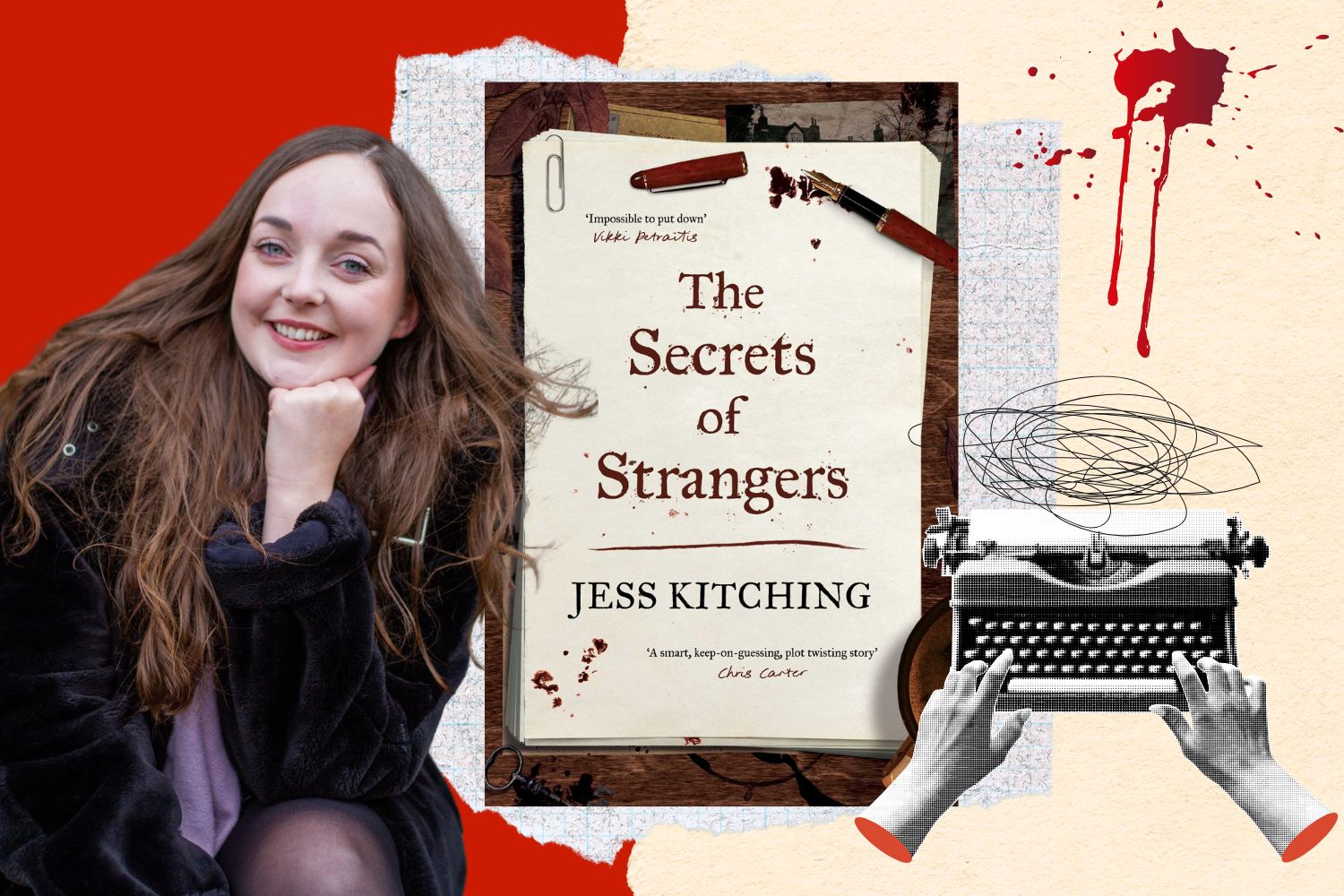 I’ve said it from the start of my author career… writing a thriller is fun.
Off the bat, let me say not in the sense of the crimes they touch upon or the distress they present their characters with. Those are, of course, serious topics that should be treated with serious respect.
But the rest of thriller writing? The suspense, the red herrings, the twists and turns? They’re the most fun a writer can have.
Recently, I amped that joy up even more through writing a meta novel. Why is that so exciting?
Let me explain.
There’s an undiscussed social contract between writers and readers where plot expectations are set and, hopefully, met. That’s where genre tropes come from. In romance, you expect plots like enemies to lovers, second-time romance or friends to lovers. Then there’s the ‘one bed’ trope. The false happy ending before the real one. The grumpy but hot neighbour.
Readers, and writers, know what they’re getting with those ideas. Timelines and structure can be played with, all with the understanding that there are rules at play that lead to a -hopefully – satisfying ending.
Crime novels and thrillers are like that, too. Readers expect mounting tension that leads to a big twist. There’s a reveal, a ‘whodunnit’ moment, a ‘will they survive this?’ show down.
Other genre-based tropes, like the locked room theory, where several characters are stuck in a set location and a crime happens, are wildly entertaining. Readers spend their time exploring that location – be it a remote island, boat or holiday home – never quite knowing who to trust… or who may be killed off next.
A meta-thriller takes the joy of tropes, amps them up, then knowingly points them out to the reader. It almost says, ‘we both know what I’m doing here… but am I doing it in the way you think?’
There’s a playfulness that comes with challenging a readers’ preconceptions. Writing The Secrets of Strangers at times felt like creating an in-joke that I was inviting audiences to be a part of. I wanted them to catch me out. I wanted them to know that yes, I was pointing that out on purpose… then wonder why I was doing that.
In The Secrets of Strangers, my main character, Janine, is a thriller writer. She sees the real-life crime unfolding in front of her, pointing out how, if this were a book, it would go. But it’s not, is it (wink, wink)?
What happens doesn’t play out like a ‘real’ book, so what is a reader to do?
Can they trust a protagonist who tells them what they’d be thinking if they were the reader?
Can they trust their usual judgement of what is a clue and what is a red herring?
These are the questions I ask in The Secrets of Strangers, and the questions I want readers to ask themselves, too. I want the reading experience to feel like a game of cat and mouse. You think you’re on to me… but are you?
To me, a meta-book is the ultimate act of trust between an author and a reader. It’s the two of you sitting down and saying, ‘game on’.
Hopefully, when tropes are toyed with in a way that you can’t predict, it creates an ending you did not see coming. After all, isn’t that the goal of most thriller writers… to make readers gasp, put down the book and say, ‘I HAVE to talk to someone about that twist!’
The first book to do that for me was Gillian Flynn’s Gone Girl. That feeling is one I’ve spent my writing life trying to emulate.
Writing The Secrets of Strangers was one of the most fun writing experiences of my career. It felt like creating a direct line of communication with my readers. It’s a book that says, ‘we’re all thriller fans here. We know what to expect with a story about a missing person… or do we?’
I wanted to flip expectations.
I wanted to create mistrust.
I wanted to leave people hooked.
Because like all art, writing is escapism. It’s connection. What better way to connect with an audience than inviting them to come on a wild, unexpected ride with you?