
Interview of Darcy Michael by Freya Bennett
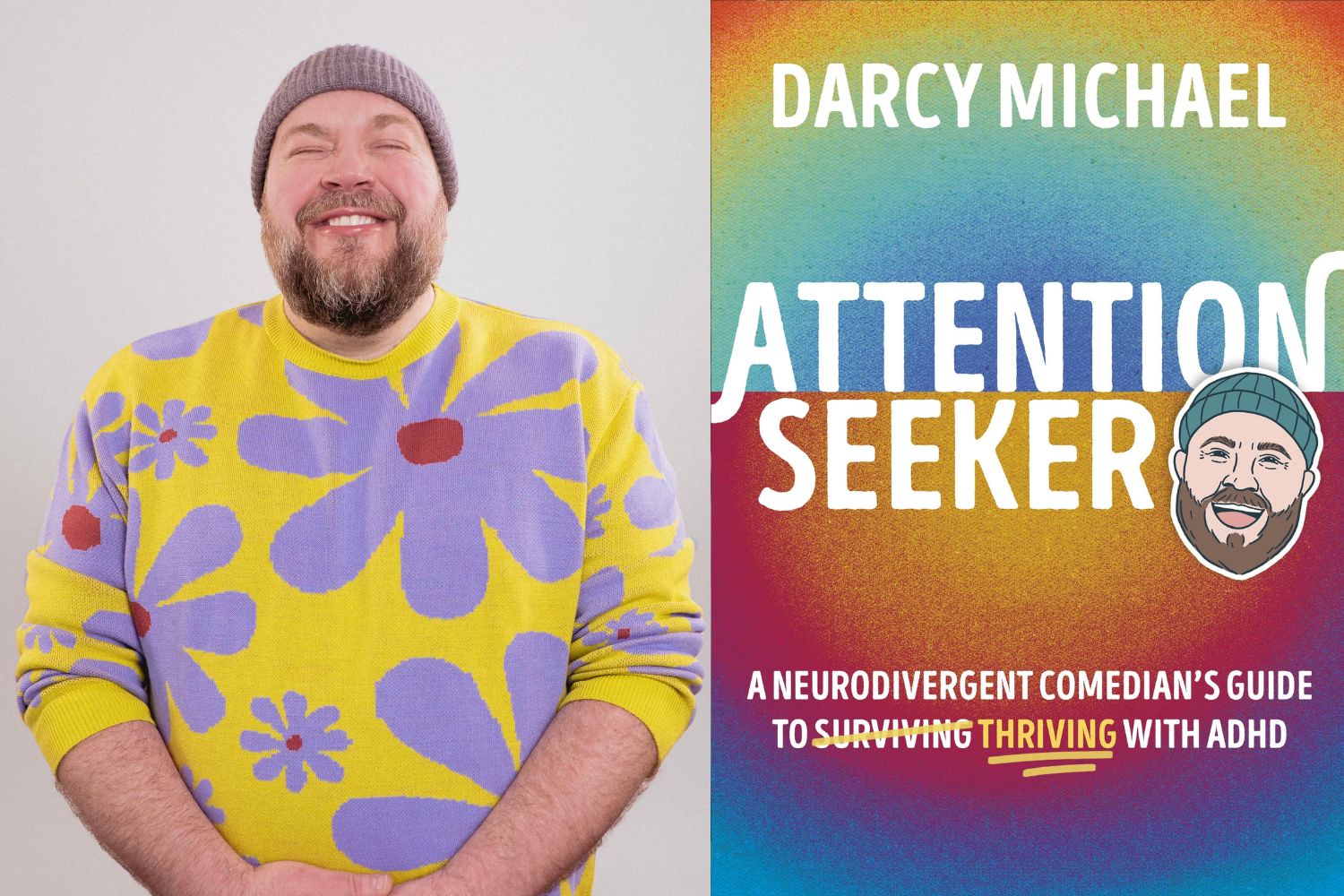
For anyone who’s ever felt like their brain runs a little too fast, jumps a little too far, or refuses to follow the neat, linear path expected of it, Attention Seeker by Darcy Michael arrives as both a relief and a revelation. I spoke with Darcy about reframing ADHD not as something to fix, but something to understand and even collaborate with. Blending humour with real vulnerability, he unpacks how an “attention-addled brain” has shaped his creative voice, how identity and self-acceptance often arrive in parallel, and why sometimes the very things we try hardest to hide end up being our greatest strengths.
In Attention Seeker, you flip the script on ADHD as something to work with rather than fix. Was there a moment in your life when that reframe really clicked for you?
I think it really clicked when I started reading the comment sections on our videos. Over and over again people would say, “Wait… are you describing my brain?” or “I thought I was the only one like this.” Seeing my own chaos reflected back at me thousands of times made me realize two things: I wasn’t broken, and I definitely wasn’t alone. Once that shame started to lift, it became a lot easier to stop trying to “fix” my brain and start figuring out how to collaborate with it instead.
How has ADHD shaped your comedic voice, both onstage and online, in ways you might not have accessed otherwise?
Nothing says comedy like chaos, and my brain is basically a group chat where nobody stays on topic. Did comedy come before the ADHD or because of the ADHD? I genuinely don’t know if I’ll ever know the answer to that. But once I started learning how my brain works, I realized a lot of the things I’d been fighting – jumping between ideas, hyper-focusing on weird details, making connections nobody asked for – are actually pretty useful tools for comedy. ADHD might make my life harder sometimes, but creatively it’s like having 37 tabs open and one of them is always accidentally hilarious.
You write openly about growing up gay while navigating an “attention-addled brain.” How did those two identities intersect for you, especially in terms of shame, visibility, and self-acceptance?
Oh wow, we’re getting into the gotcha journalism now. I’ve basically had two coming-outs in my life: one when I came out as queer, and another when I was diagnosed with ADHD. And weirdly, they felt pretty similar. Both came with this long period of thinking, “Why am I different?” followed by the realization that the problem wasn’t me- it was the expectation that I should be something else. Once I started accepting both parts of myself, a lot of that shame loosened its grip. Turns out when you stop hiding who you are, you also get a lot funnier.
Tell us a bit about the other voices you have on the page, and what did collaboration (or consent!) look like while writing it?
A lot of the stories in the book involve the people closest to me – especially my husband Jeremy – so consent was very much part of the process. I’d often check in and say, “Hey, quick question: on a scale of 1 to lawsuit, how comfortable are you with me telling this story?” Thankfully Jer has a great sense of humour about our life, and honestly he’s responsible for half the material anyway. The book is very much my perspective, but the people in my life made sure the stories still felt fair, human, and occasionally slightly less incriminating.
There’s a lot of laughter in Attention Seeker, but also tenderness. Were there any stories that felt particularly vulnerable to share publicly?
Absolutely. Humour is usually my armour, so writing moments where I couldn’t hide behind a punchline felt a bit like walking onstage without pants. Some of the stories about coming out, my family, relationships, and the parts of ADHD that aren’t cute or quirky like Rejection Sensitivity Dysphoria were harder to put on the page. But the truth is, those are often the moments people connect to the most. Comedy can open the door, but honesty is usually what makes people stay in the room
You’re touring Australia in July. How does performing live compare to writing a book when you have ADHD?
They are wildly different experiences. Writing a book with ADHD is like trying to herd caffeinated squirrels for two years. Stand-up, on the other hand, is immediate. There’s an audience, there’s energy, and if something is funny you know within about half a second. My ADHD actually thrives in that environment because it’s fast, reactive, and a little chaotic. Writing required discipline and structure. Performing just requires a microphone and my brain doing parkour in real time.