
Interview with Lara Ricote by Phoebe O’Brien and Rachel Iampolski
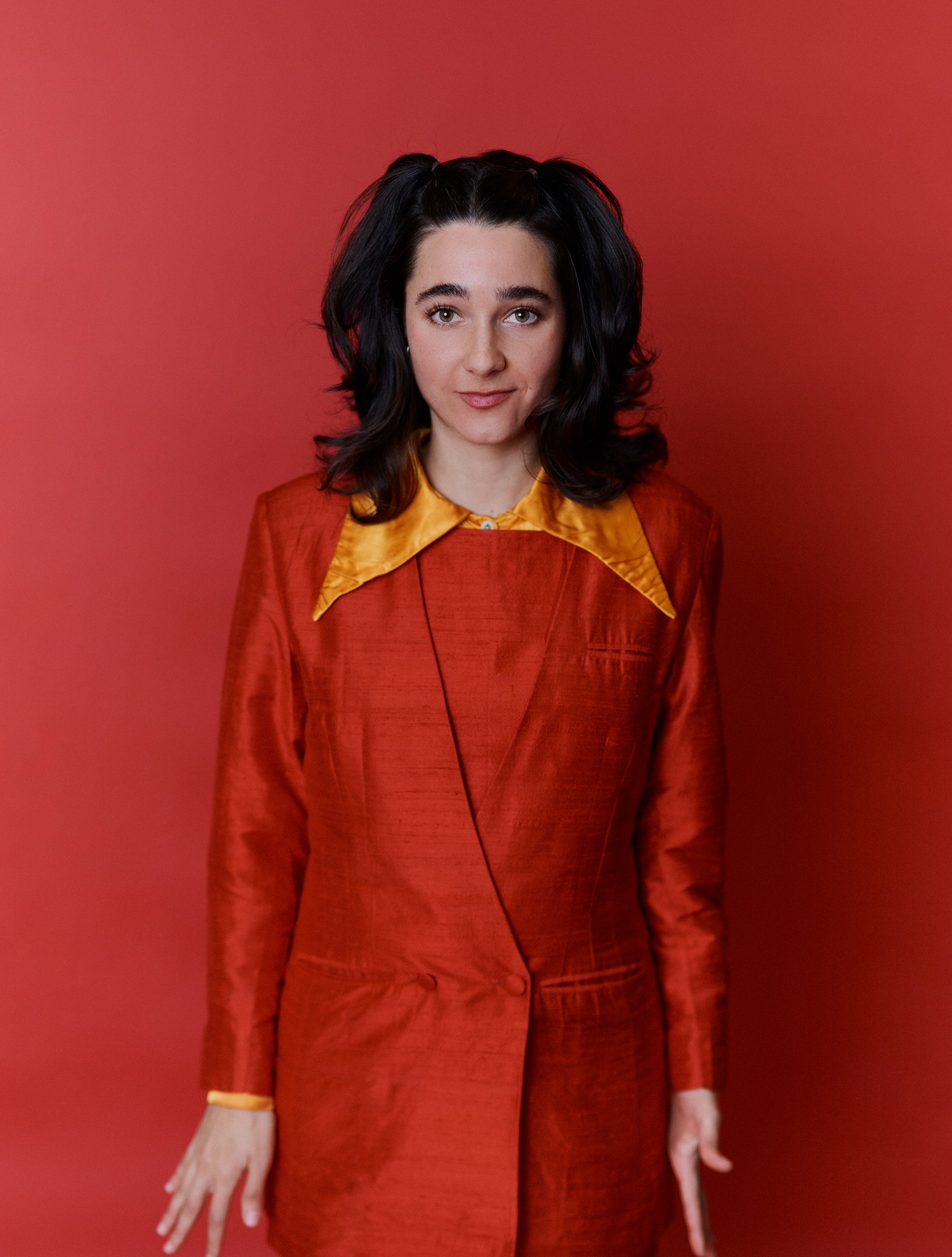
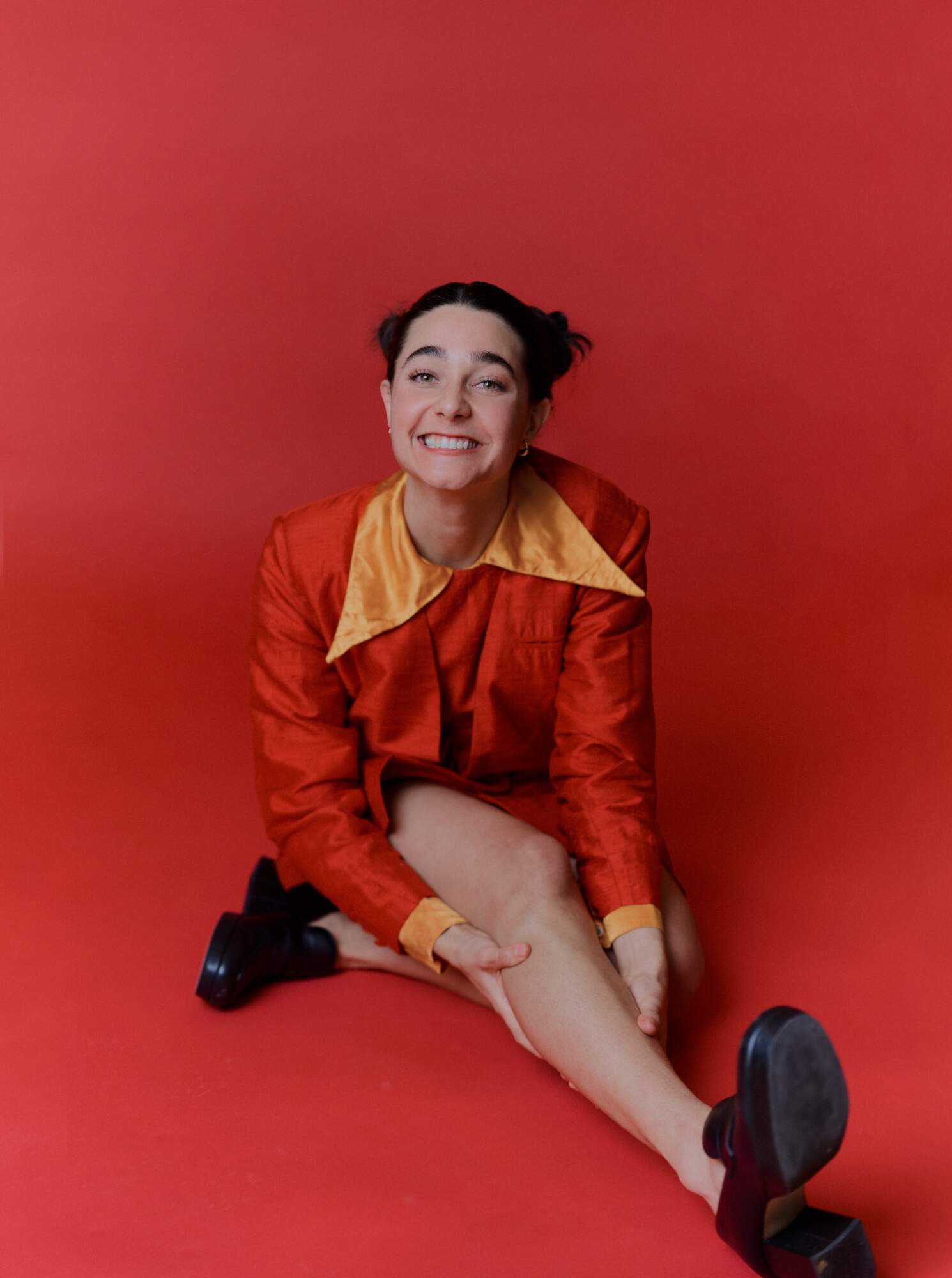
It’s a pouring start to the Melbourne International Comedy Festival. Through relentless rain, we make our way to ACMI to catch Lara Ricote’s Melbourne return with Inkling, a playful, absurd exploration of what it means to trust those small, insistent gut instincts.
The show opens with the myth of Oedipus, recast through Ricote’s chaotic lens: the ultimate story of ignoring one’s inklings. From there, she folds in her own life, exploring moments where she followed — or failed to follow — her intuition. The inspiration for the show came from a chance encounter at a museum with an older man. So naturally, we meet Lara at the National Gallery of Victoria tearoom during her festival downtime to unpack this.
“The show is about how feelings are actually messages from the inside,” she says. “It started because a man was rude to me in a museum. I got into a fight. I yelled, I cried — it was a whole thing. I felt a lot of emotions because he wouldn’t speak up, and I’m hard of hearing. There was no way for me to reach him, and I wanted to.”
Chatting with Lara feels like a warm, if not slightly chaotic hug— her ideas tumble out in excited, rapid-fire bursts, and are deeply earnest. She is curious and deeply engaged with making sense of life, even as she pauses to sip her chamomile tea or tell an off-the-cuff joke.
Over the course of our conversation, it becomes particularly clear: Ricote is ruthlessly introspective. She looks where most people don’t. What might have been a passing moment, or journal fodder, became the premise of a whole, brilliant show.
“I’m a person who wants to know thyself,” she says. “So I’m going to be looking at it [my own life and instincts]. And when I started looking at it, it kind of unravelled my life in a really good way.”
That relentless exploration carries into her writing process.
“When you finish a show, you’re so far away from the beginning that you go: who the hell was that person who made it?” she laughs. “It’s very confusing.”
Know thyself
Inkling draws on the ancient Greek Delphic maxims — know thyself, nothing in excess and surety leads to ruin — not as answers but as anchors. They are literally on display in the background of the entire show.
“If you can hold all of them,” she says, “you get clarity, but also something to hold onto.”
Her work lives in the tension between certainty and doubt, seriousness and play. A space where both can exist at once. For Ricote, that duality isn’t a problem to fix, it’s the whole point.
“I’ll feel like I really know something,” she says, “and then at the same time I’m like, I don’t know, man.” She grins. “And that’s funny.”
Beneath the jokes, there’s a shift. Ricote describes Inkling as the first show where she’s not just circling ideas, but stating them outright:
“This is the first time I’m actually saying what I think.”
That clarity didn’t come easily, however. Over the past year, a series of personal events, many of which are covered in the show, forced her inward.
“When you don’t look at what’s happening, something will happen that makes you look,” she reflects.
It was during her political science degree, while studying political theory and organising with advocacy group Extinction Rebellion, that she first found comedy — or it found her.
Her sister brought her to an improv class, and something clicked:
“I was like — oh this is really special.”
She describes, bright-eyed, how comedy felt revolutionary, allowing her to explore the same urgent, inquisitive ideas that she has long been thinking about, but in a way that for the first time felt playful.
“When stand-up came around, it was like, oh I can marry these things. I can talk about what matters to me. And it felt political too, being Latina, being hard of hearing, and just saying stuff.”
The Oracle, the inner compass
Ricote recounts how as a child for her birthday she was gifted a session with a psychic oracle. Later, the Oracle of Delphi entered her imagination during a 2020 lockdown storytelling course in Amsterdam.
“I’d just started comedy, I didn’t know what I was looking at,” she says. “That’s the place where you go to the oracle.”
In Inkling, that instinct shifts. Where she once looked outward for answers, she’s now more interested in what happens when you stop going to the oracle altogether – and start trusting yourself.
“When you hear something, it affects you,” she says. “And you can’t really control how it changes your life”.
For Ricote, trusting yourself often means being relentlessly curious wherever it leads.
With the chamomile tea rapidly cooling beside her, Ricote excitedly recounts the time she had sex with her (usually) gay male best friend as an example:
Ignited by curiosity, “we thought, wait a minute. We should have sex. How have we never thought about that?”
The experience quickly sparked a podcast idea. It helps that her bedfellow-turned-sexual anthropologist friend is also a comedian, with a similar insatiable curiosity:
“We thought we should make a podcast where we talk about everything — what it’s like to have sex with each other. We are looking at our lives and we have the opportunity to look at this together. Why wouldn’t we?”
For Ricote, the act of writing about it, talking about it publicly, and processing it in conversation was inseparable from the experience itself:
“It’s like the writing about it is the thing that lets me really look at it, and I should, especially if I’m going to express it to people.”
In her downtime between festival sets, she mentions she has also been drawn to Quaker worship sessions.
For those unfamiliar with Quakerism (or who missed the iconic scene in Season 2 Fleabag), Quakers practice unprogrammed worship based on sitting as a group for an hour in silent waiting, allowing for spontaneous confession if one feels moved by the spirit to speak. From the London Quaker Centre to the one in North Melbourne, Lara found something profound in sitting in on these sessions:
“We go and I was just like, right, this is actually the whole thing: which is understanding that we are all sacred, there is a light, it’s inside of every single one of us, like the creative force, and if we just for one hour, sit down, shut up, and assume that God is talking to us, you get a bunch of stuff … People stand up and share short little things, like click moments … and no one is telling you how to do it.”
Collaboration and clarity
Just as important as knowing thyself is remembering that ‘surety leads to ruin’. It is on this note that Abby Wambaugh enters the conversation — a fellow comedian who directs Lara’s show, and Lara in turn directs hers. The two recount the importance of their working relationship over a cup of tea, and how meaningful an external voice has been in that process:
“It teaches you something about the ego, in a really good way. Making stuff with other people lets me love parts of my show differently. I wouldn’t love it the same way if I’d done it alone, that’s the real gift of collaboration.”
Wambaugh, sitting alongside her, speaks warmly about their relationship and the process of making the work. There’s a clear trust there, not just in Ricote as a performer, but in the way her mind moves.
For Ricote, chaos and clarity coexist. Whether in Quaker worship, untangling life’s messes or shaping a show, she follows the small inklings that insist on being heard, letting her work and life unfold without trying to pin it down.
Inkling
Lara Ricote’s Inkling runs at the Melbourne International Comedy Festival from 26 March to 14 April at ACMI’s Gandel Lab, Fed Square, Melbourne.
To find out more visit Melbourne International Comedy Festival.