
Interview of Dee Salmin by Freya Bennett
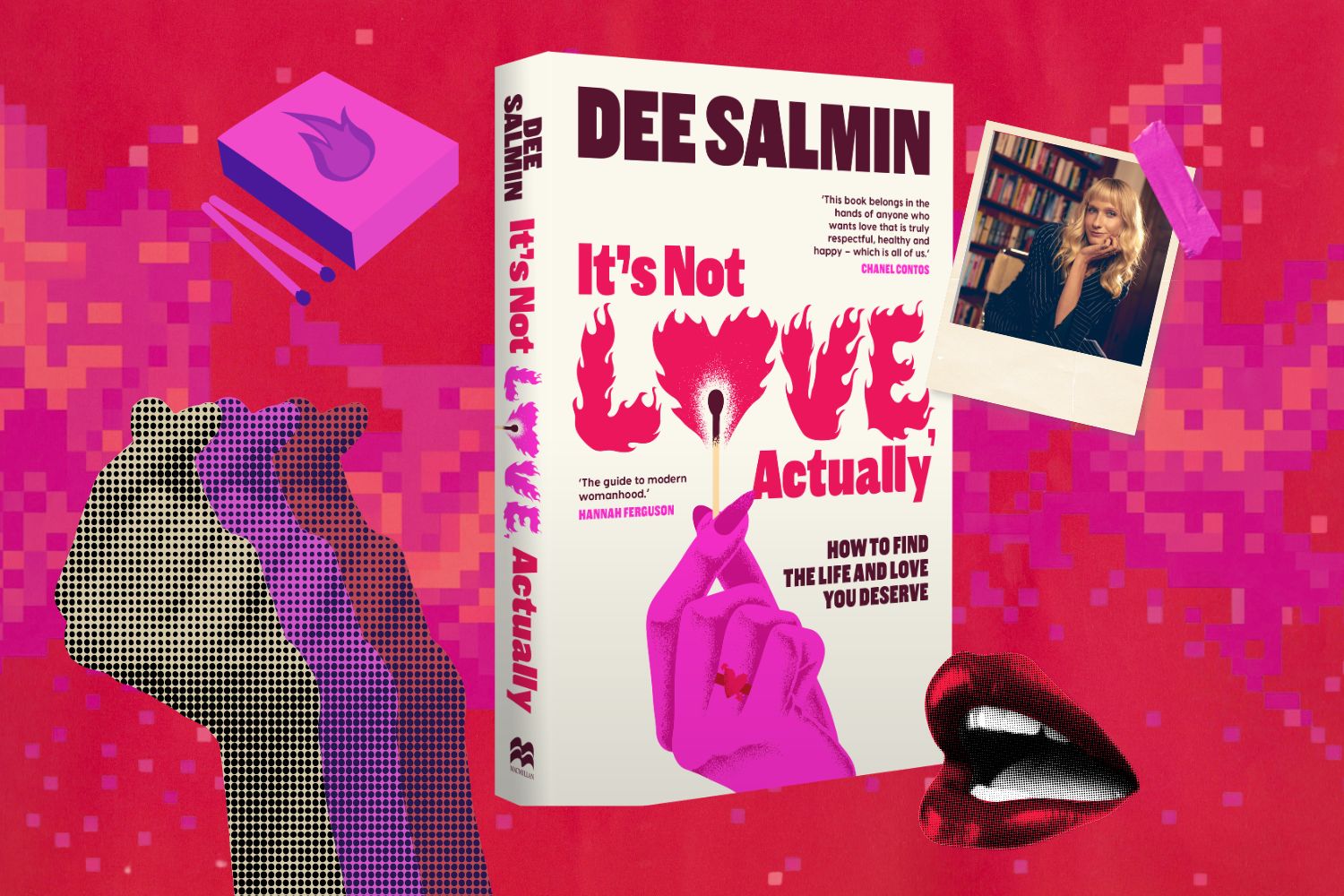
With her debut book It’s Not Love, Actually, Dee Salmin is challenging everything we’ve been taught about romance, relationships and why women so often settle for less than they deserve. Drawing from years hosting The Hook Up on triple j, alongside her own painfully relatable dating experiences, Salmin blends memoir, cultural critique and feminist manifesto into a refreshingly honest exploration of love beyond the rom-com fairytale. We chatted to her about decentring men, the death of the “cool girl”, and why being single might actually be the beginning of your best life.
 Hi Dee! How are you feeling now that It’s Not Love, Actually is out in the world?
Hi! It has been so surreal! I wrote most of It’s Not Love, Actually quite intimately getting up at 5am every morning in the dark before work and I purposely didn’t think too much about people reading it because I wanted to write as vulnerably and honestly as possible. So, it’s only starting to hit me now, after reading all the reviews and dm’s from people who’ve really resonated with the book. Which has been such an incredible and surreal feeling!
You’ve spent years hearing people’s most intimate dating confessions on The Hook Up, what’s one “truth about love” you got sick of hearing repeated, and had to challenge in this book?
I’ve heard from so many people about how they’ve felt like they’re ‘less than’ or that they’re ‘missing out’ because they’re not in a romantic relationship. I’ve seen so many people (including myself) put up with shitty behaviour or settle because we’re taught that as women it’s better to have a partner than to not have one at all and be alone. It took me years to realise just how damaging this societal idea is and after speaking to so many experts on love, I learnt just how untrue it actually is. You can have just as incredibly, life-affirming, intimate love that is just as powerful outside of romantic relationships. That’s why the whole section on love in my book is about challenging the ‘love’ hierarchy. I want people to realise in our western world we’ve been taught to believe romantic love is the most important love but that this is actually a societal construct. Research shows as humans we need love and we need a village, but you can get just as fulfilling love from your friends, family, mentors, god etc etc.
This book is part memoir, part manifesto. What was harder: pulling apart the cultural myths about love, or being honest about your own?
I love this question! Definitely being honest about my own. As a recovering ‘cool girl’, telling the world about all the ways I was so desperate for male validation and sharing so many embarrassing stories of putting up with shocking behaviour for just a crumb of affection was really hard to do. Like I speak about in the book, I was a loud and proud feminist who talked the talk but in my love life I wasn’t walking the walk. Reliving and sharing those moments has been pretty vulnerable and therefore hard to do. But for me it’s been so important to show other women that I see them and hopefully take away some of their shame. I think Brene Brown once said “shame cannot survive being spoken.” So, if I’ve made anyone feel less alone in what they’re going through, then being honest about my life has been so worth it!
You write about women being told to shrink themselves for love. What does “taking up space in dating” actually look like in real life (not just in theory)?
Sometimes it’s as simple as asking yourself ‘do I actually even like them?’. We’ve been so conditioned as women to be grateful for any sort of male validation and attention that as soon as someone shows us they’re keen, we completely drop everything to be with them – rather than taking our time getting to know them and figuring out if they’re even right for us.
It can also look like: showing up as your complete authentic self. Too often I see women talk down their achievements or the things they’re passionate about, so they don’t intimidate men. Or they cancel their plans or ditch their friends. Or pretend they’re not upset about something when they really are. Women are constantly being told how to show up in the world and it’s fucking exhausting. So yes, it might seem really obvious and simple but genuinely showing up as your complete and authentic self and decentring men can be the best way to take up space in dating.
What’s a belief about love or relationships that you had at 21 that you would absolutely roast your younger self for now?
That breaking up with your boyfriend means you’ll never find love again. Because we put so much value on romantic love and so much pressure on women to find a partner and become a wife and mother, I thought that once I found someone that loved me that I should just be grateful and that ending that relationship meant I might never find love again. How dramatic! Thank god deep down in my gut I knew I needed to be single because I ended up moving to Melbourne, getting my dream job, and meeting my platonic life partner Brendan who taught me what real love actually was. I’ve found so much love since then – including the most important love which is the love I have for myself.
What do you hope readers take away from your book?
I hope if anything this book encourages readers to stop and reflect. Whether it’s their uncomfortable feelings around being single, participating in hook-up culture, getting married, or whether they’re settling in their relationship. I hope people unpack what things they’ve learnt from their parents or caregivers, or what’s been expected of us because of our genders and figure out what kind of future they actually want for themselves. And in a time of the manosphere and men becoming more ‘traditional’ and misogynistic, I hope this book gives women hope. Hope that being single and building the life you want for yourself is incredibly exciting and still so full of love.
It’s Not Love, Actually by Dee Salmin (Macmillan Australia) is out now