
Interview of Lee Lai by Freya Bennett
Winner of the 2026 Stella Prize, Cannon is a sharp, funny and emotionally chaotic exploration of queer friendship, burnout, obligation and the strange intimacy of growing older alongside someone who once felt essential to your survival. Through sweaty Montreal heatwaves, horror movie nights and the slow unraveling of routine, acclaimed Australian cartoonist Lee Lai captures the volatility of adult friendships with humour, tenderness and an almost unbearable level of emotional precision. We spoke to Lai about difficult friendships, nervous systems on the brink, queer intimacy and why devastation is often inseparable from hilarity.
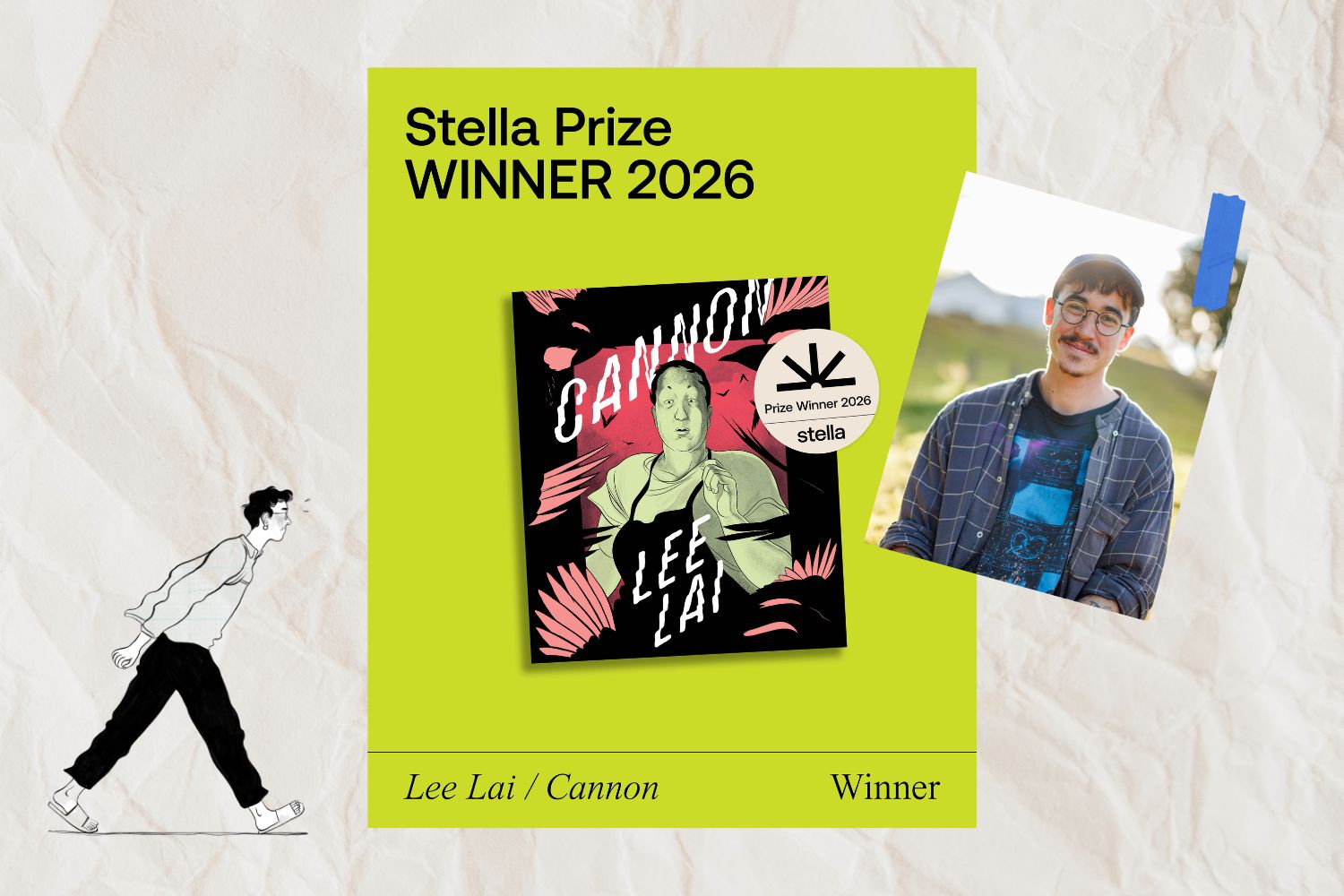
Hi Lee! Huge congratulations on winning the Stella Prize 2026 for Cannon! It’s such a raw, funny, and emotionally volatile book; did you have any sense while making it that this particular story would resonate so widely?
Thank you! I had no sense at all of what would resonate— for years, the project felt unruly and indistinct. It’s so easy to feel in the weeds during the process of making something, especially with a medium as laborious as cartooning. Though now, in hindsight, I suppose I shouldn’t be surprised that the particular theme of ‘difficult adult friendships’ lands for a broader audience than the niche that I live within. That, and a pervasive sense of rage.
The friendship between Cannon and Trish feels incredibly specific but also uncomfortably universal. What were you trying to capture about long-term friendships in your twenties that you don’t often see represented?
I’ve come to accept, sadly at times, that friendships are often more fragile than we expect and hope they are. I wanted to show a friendship that has grown out of its initial intimacy, into something that’s chafing at the heaviness and responsibilities of day-to-day dirt: “adulthood”, you could say. I think like any relationship, friendships pass through these gateways where their relevancy and resilience is tested— I wanted to write about that particular moment in time.
There’s a real balancing act between humour and anxiety in the book, moments are genuinely funny but also devastating. How do you approach holding those tones together?
The humour in Cannon was a very deliberate effort after taking on some comments from the brilliant late Rachel Cooke, who noted that my last book was lacking in levity (I agree). It prompted me to reflect on some of the most testing and difficult moments in my own life, and realize that they were filled with hilarity in amongst, and perhaps even because of, the devastation. From a storytelling perspective, I think the moments of earnest emotionality and sadness might hit more effectively because of the silliness.
Food, routine, and those weekly horror movie nights feel like emotional anchors for the characters. What draws you to those small rituals in your storytelling?
I was looking for ritualistic habits for the characters to anchor around because I hoped that it would create a rhythm that would make their connections to one another feel more intimate. One of my main goals in the story was to set up a relationship built around habit and then break it open, and so those routines served as a useful tension against the eventual changes that come crashing in. It’s hard to embrace change when we’re attached to all those little, lived-in things.
Visually, Cannon captures a kind of “nervous system on the brink” feeling. Were there particular stylistic choices you used to convey that internal state?
It was fun and tricky to show a dysregulated nervous system through dialogue and drawings alone! Birds, beads of sweat, tense little postures, tight mouths and pinprick pupils were some of my attempts. I was luck to have countless examples of how to draw anxiety in the work of many cartoonist peers— there’s a high number of neurotic cartoonists out there, and therefore a real wealth of mental health themes and stories in the graphic storytelling realm.
Both Cannon and Stone Fruit explore queer relationships with a lot of nuance and messiness, has your approach to depicting intimacy shifted between the two?
Mostly I think it’s my ambition and interests that have shifted, when it comes to how I’d like to write intimacy. With Stone Fruit, it felt like a familiar structure to write about the decline of a romantic relationship because, in a narrative sense, the shape is quite distinct. In a platonic friendship, especially one that’s ranged around and developed over many years, it’s a more ambiguous structure with less clearly defined lines of how to make it or break it. That malleability and ambiguity are some of the things I find so thrilling and scary and precious about queer friendships.
The question of what we owe each other versus what we owe ourselves really lingers after finishing the book. Did working on Cannon clarify that for you at all, or does it still feel unresolved?
Horrifyingly, I think that’s a never ending, ongoing question! Something that prompted me to write both these books has been the realization, over and over again, that I can know an emotional truth in theory, but then in practice the scenarios are so complex that new concepts, questions and lessons emerge each time. Humbling and frustrating and amazing stuff.