
Interview with Lauren Keegan by Freya Bennett
Lauren Keegan’s new novel, The Woman in the Seal Skin, plunges readers into the icy, unforgiving world of the 1690s Orkney islands. Drawing on selkie folklore, the story follows Malie as she navigates the tension between domestic duty and the call of the sea, exploring freedom, female autonomy, and the pull of one’s heritage against expectation. I chatted with Lauren about the research that went into the book, its wild setting, and the forces that shape her unforgettable heroine.
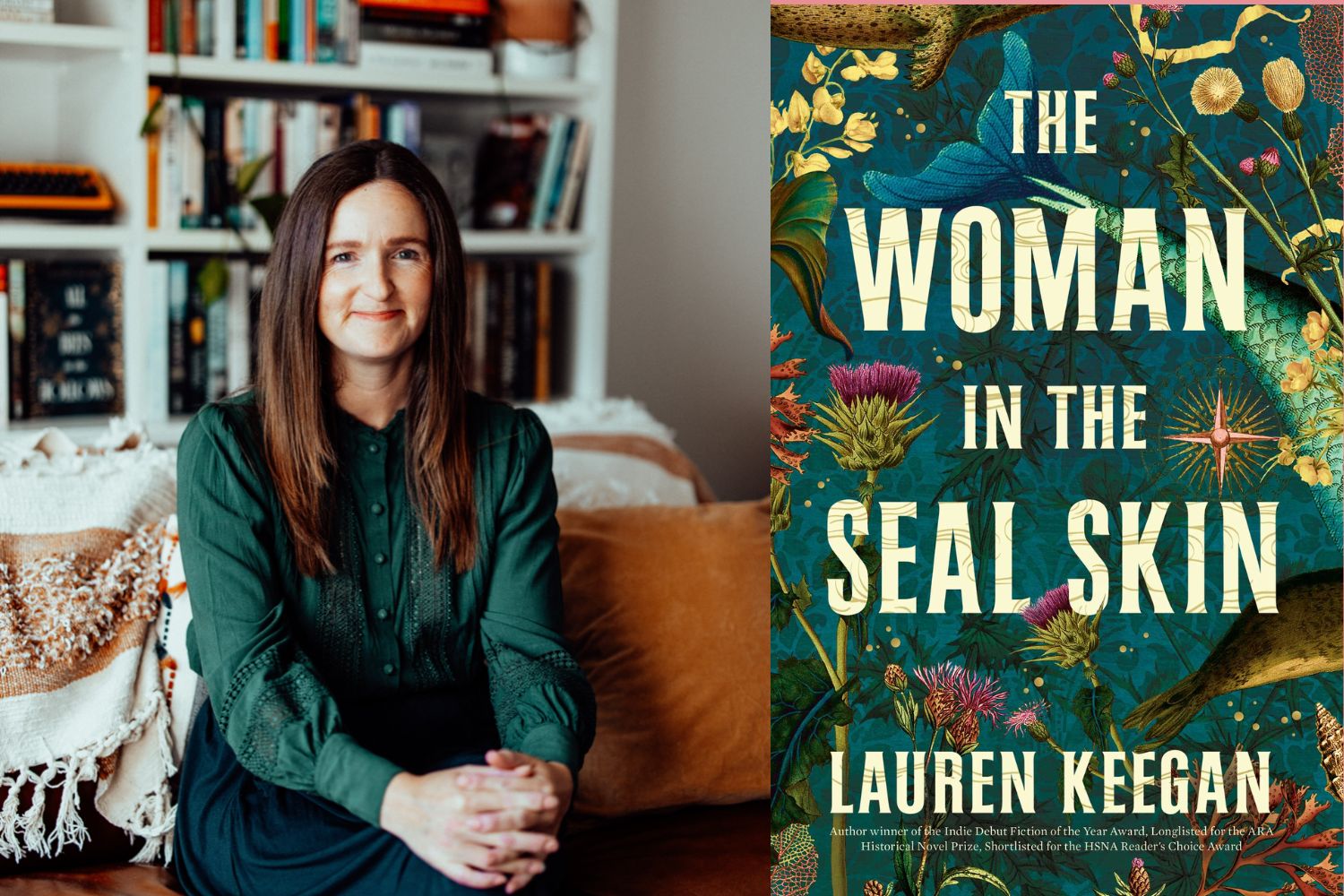 Hi Lauren, how are you? Can you tell us a bit about where you are and what you can see out your window today?
Thank you for having me! I live and work on Gundungurra and Dharawal Country in South-West Sydney. I live on a quarter acre block with my husband and two daughters. A Guara bush stands tall outside my home office window, and the flowers look like bright pink butterflies. Birds, wasps and bees frequently pop by often. I can’t work without seeing something green.
How are you feeling now The Woman in the Seal Skin is out in the world?
Relieved! This story has been with me for several years and I’m so excited that it’s now in the hands of readers.
Your book is set during Europe’s “Little Ice Age,” which feels both physically and emotionally chilling. How did the historical setting shape the atmosphere and the inner world of your characters?
The climate and setting greatly influenced the characters and the atmospheric nature of the story. The Woman in the Seal Skin is set in the 1690’s, the coldest decade in what was known as Europe’s ‘Little Ice Age’ which lasted three centuries. It was the perfect backdrop to my story. There was widespread famine, crop failure, loss of livestock… so there’s this pressure cooker of stress, and desperation. Then the fishermen can no longer haul in fish, and what are fishermen without fish? These are times in our history, when folklore and mythology helped people make sense of their world, helped explain the unexplainable. Historically, at times of widespread famine, witch trials soared.
Malie is torn between safety on land and a deep pull toward the sea. What did that tension allow you to explore about freedom, expectation and female autonomy?
When I first stumbled upon the selkie mythology, what immediately stood out to me was this push-pull experience, the push to domestic obligation and the pull to the sea. This made me think of maternal ambivalence, the experience of mothers having two conflicting feelings at once. For example, loving their children AND wanting time alone. The selkie women felt torn between their family on land, and their former selves at sea. I think many women, particularly mothers, will relate to these stories and the tension between obligation and longing. Clinically, I saw this so often in my perinatal psychology practice. There’s also a lot of guilt wrapped up in all this when we lean towards one or the other.
Besides the wild weather, Malie lives a predictable life, following the path laid out for her and she’s afraid of making the “wrong” choices like her mother. The sea is wild, but it also offers freedom, independence and a connection to her heritage. In the story, the sea offers an opportunity for Malie to embrace the wildness, to completely let go of expectation and follow her own path.
Nature feels almost like another character in the novel. How important was the landscape of the Orkney islands in shaping Malie’s story?
Thank you! I love books where the setting is so visceral that it’s like a character too. There’s something wild and yet forgiving about nature. It is also completely out of our control. In historical times, we couldn’t just check our weather app to predict the weather, people had innate knowledge of the natural world, valuable intergenerational knowledge and wisdom and a deep respect for nature, which I think we have lost over the centuries.
Malie lives on the Orkney islands which are wild and windy and remote. Her community, particularly the men in her family, are as controlling, rough and wild as the sea. The friction between this creates so much tension!
Your previous novel All the Bees in the Hollows also explores the relationship between women and the natural world. Is this connection something you find yourself returning to in your writing?
Writers tend to come back to the same themes, examining and exploring them in different ways. For me, I return to mother-daughter relationships, grief and the natural world. I am not a religious or spiritual person, but nature is quite grounding and regulating for me. I tend to feel a bit claustrophobic if I’m in artificial spaces absent of glimpses of nature. Walking and spending time in nature has a calming effect on me, and I like to examine how women can ground themselves or reconnect with themselves through the natural world. Women can so often be in their heads, particularly mothers who carry the mental load, but feeling the earth beneath our feet can gently nudge us back into our bodies.
Can you tell us a bit about the process of writing this book? Did you immerse yourself in nature IRL or were you researching like mad or both?
Both, really. I walked along the Australian coastlines, spent time with a lively seal colony down on the south coast of NSW, but there was also a LOT of research that went into bringing the setting to life. I researched flora and fauna on the islands. I examined archaeological records, landscape studies, climate reports and read a fantastic book on Europe’s Little Ice Age which helped me get a sense of what life would have been like during that time.
Often, before I sat down to write, I’d pop on the BBC Sounds Orkney weather forecast! I’d listen to the host’s lilting accent and the way they described the weather patterns. I listened to crashing waves and wind soundtracks. I watched countless Youtube videos and documentaries about seals, including a super cute live pup cam!
What do you hope readers carry with them after they close the final page of The Woman in the Seal Skin?
Malie has little power in her family, or her community, but she finds her way through the darkness. She draws on the wisdom of her ancestors, and she embraces her inner wildness. Even though it is a dark novel, I hope readers are left with a sense of hope, or even empowerment. Ultimately, I hope that the readers who fall in love with Malie’s story will share it with other women in their lives.