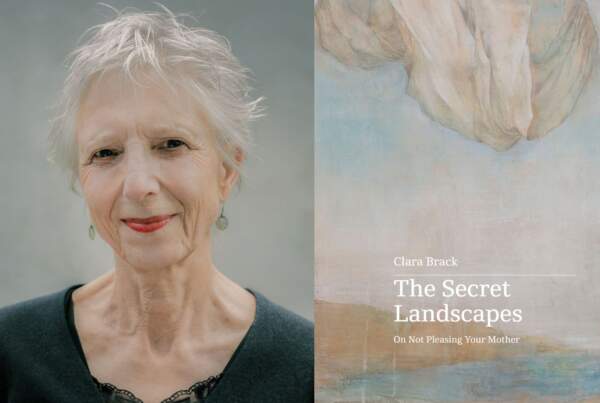

Interview with Trace Balla by Freya Bennett
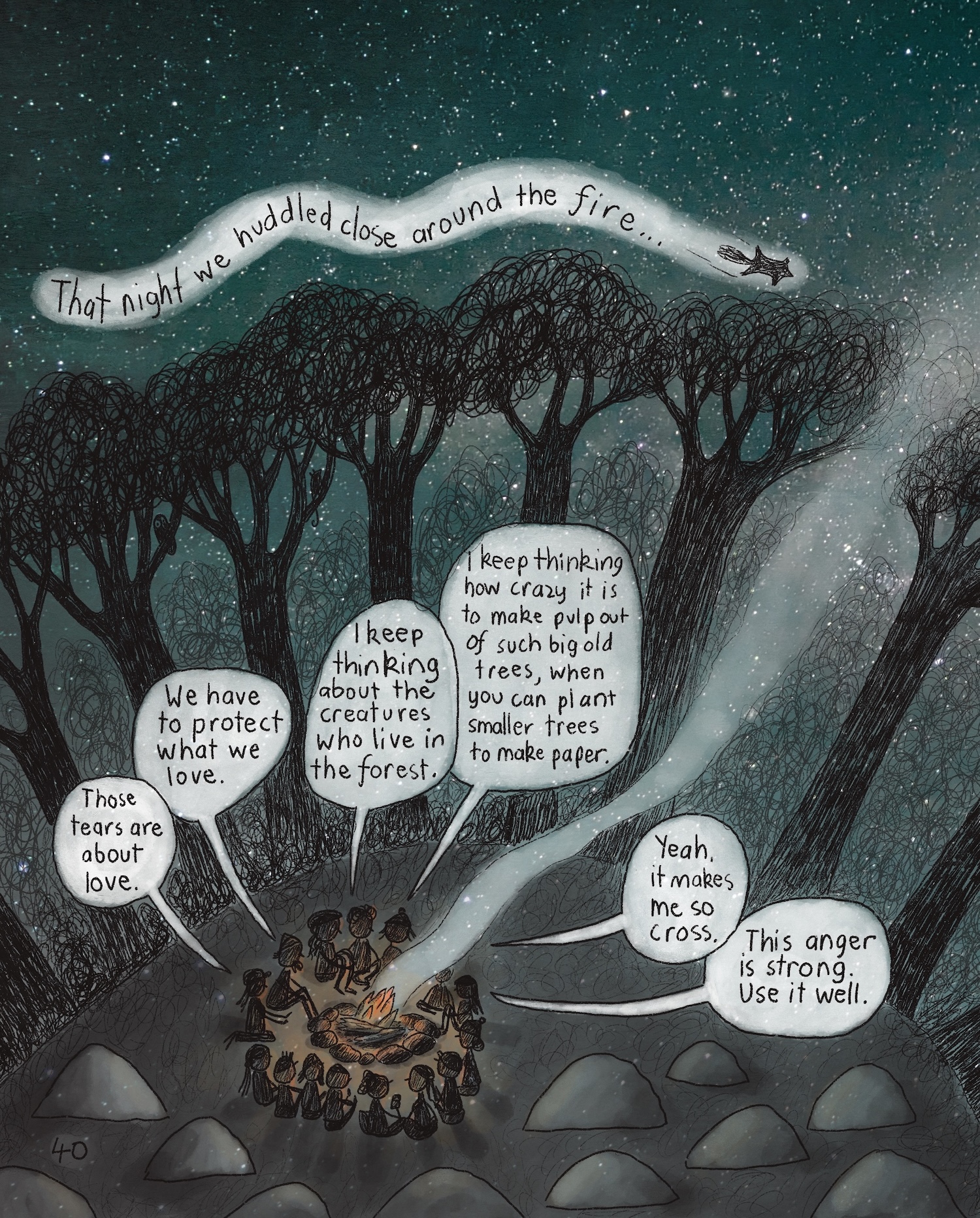
I read Treeshape with my eight-year-old daughter, huddled in our hammock as cockatoos screeched overhead—a noisy flock calling to each other about their day. We kept reading until it was too dark to see the words, finishing the book over the next three evenings. Trace Balla’s gentle storytelling and kind drawings are her true gift, showing that anyone can channel their passion into protest, creativity, and change. After reading Treeshape, my daughter and I are ready to find our own trees to hug, to stretch in, to protect. I chatted with Trace about her journey, her art, and the activism at the heart of Treeshape.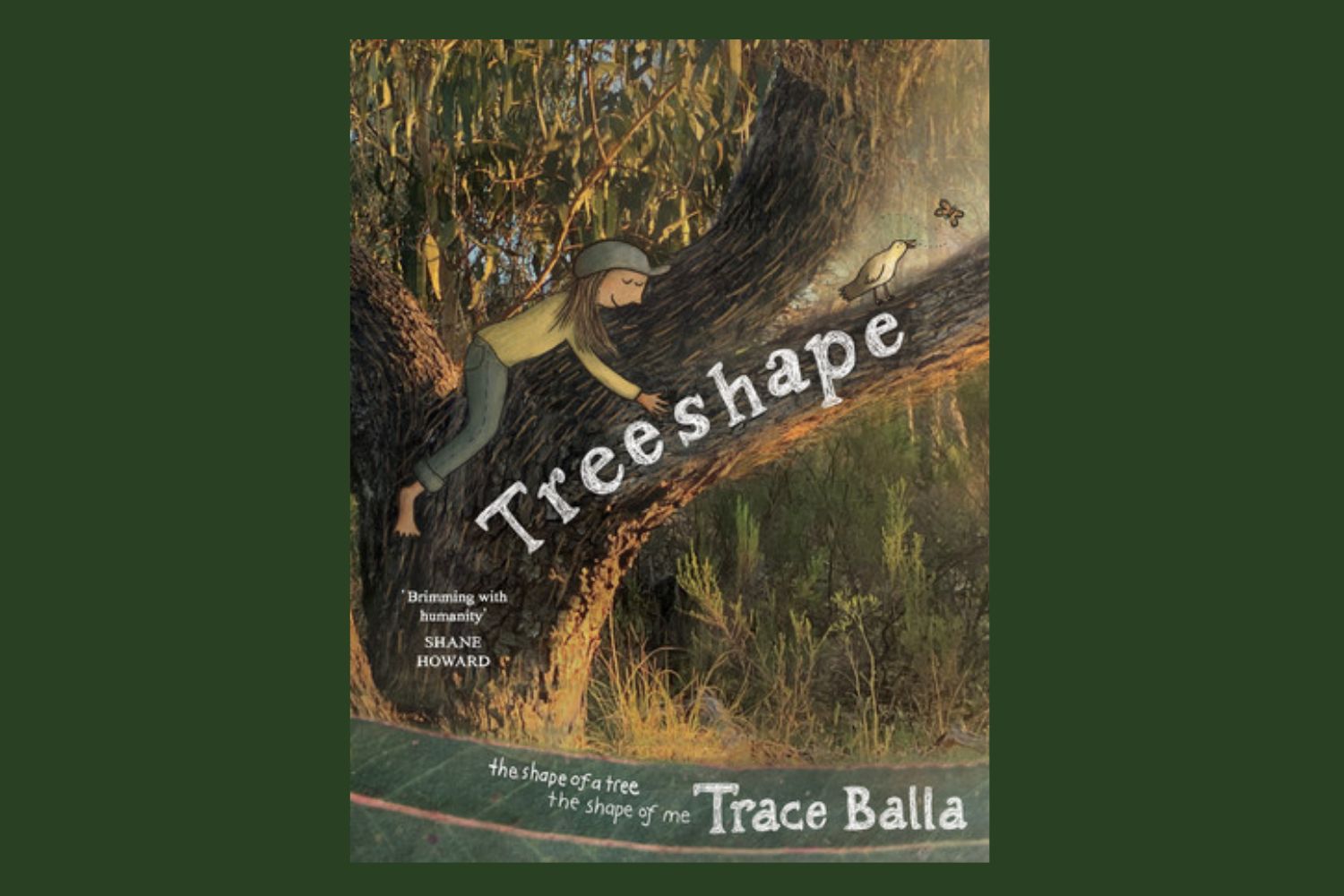 Hi Trace, congratulations on a beautiful graphic memoir! What inspired you to turn your experiences in environmental activism into a graphic memoir?
The heart of this book began as an oral story in a course I was participating in. I practised the story around fires, under the stars and beside waterways in the tree shade, over and over with different people. Each of them inspiring me to enrich the story with different angles that were relevant to them. After a while, I realised this was a story I wanted to share beyond the fire and those close to me. I’ve come to understand that stories and books have a place to play in cultural awareness and change. In my other books, I tell stories that are from my experiences, but I change them so that they’re more kid focused. For example I made journals of myself and my partner at the time, paddling on the Bochara (Glenelg ) River – but I thought it would be more interesting for kids to have a story with a kid as a main character – so I changed it to the story of uncle Egg and Clancy in my book Rivertime.
In Treeshape, there was so much to share about my own experiences in relation to what I want to convey, so I decided to do it as a memoir. Our lives are woven into the political landscape and this informs the book as well. It is aimed at adults and older readers from upper primary and up. I included more action, and myself as a child, and my son as a child, to be relatable to younger readers.
Humans have used words, images, song and dance throughout history to tell stories that reflect and shape culture. We “read” so much apart from words, like seasonal markers, footprints, the lay of the land. Words can be overrated in our mainstream culture, and we can miss so many nuances as well as those that are more visually or spatially oriented. I love the combination of words and images, so creating story as graphic novel really suits me.
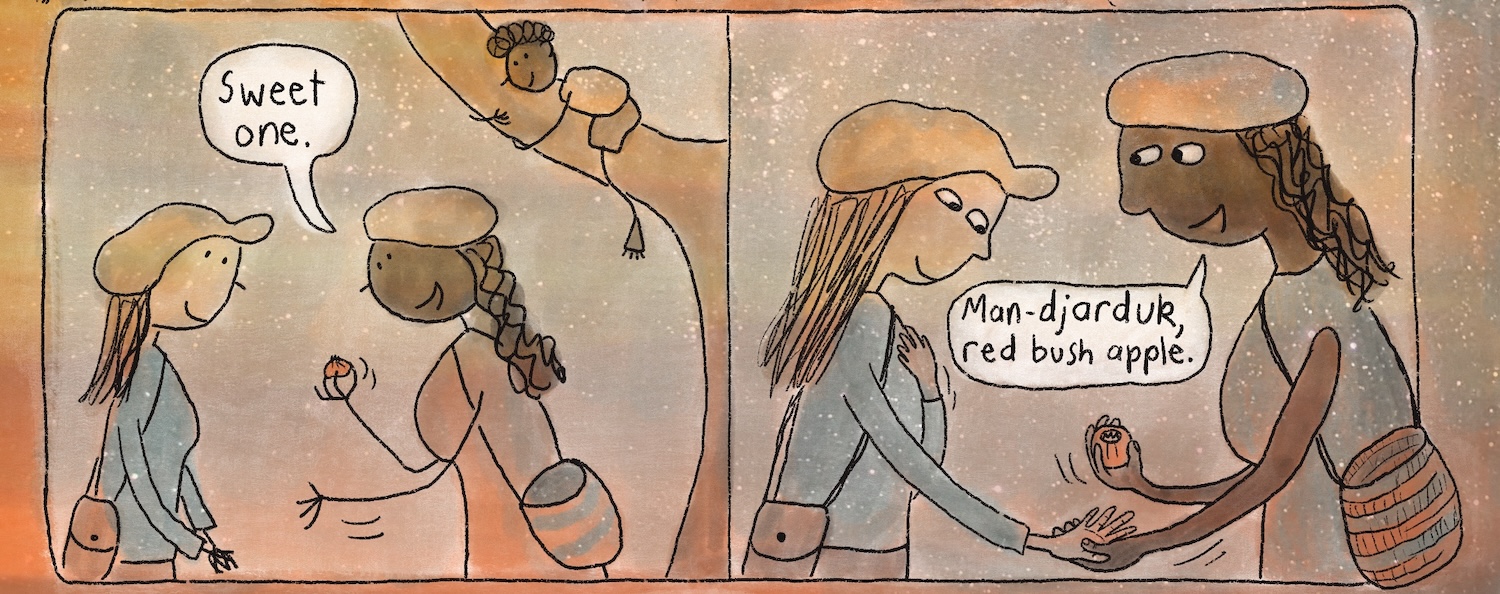 How did your time protesting at Jabiluka shape your perspective on activism and care for Country?
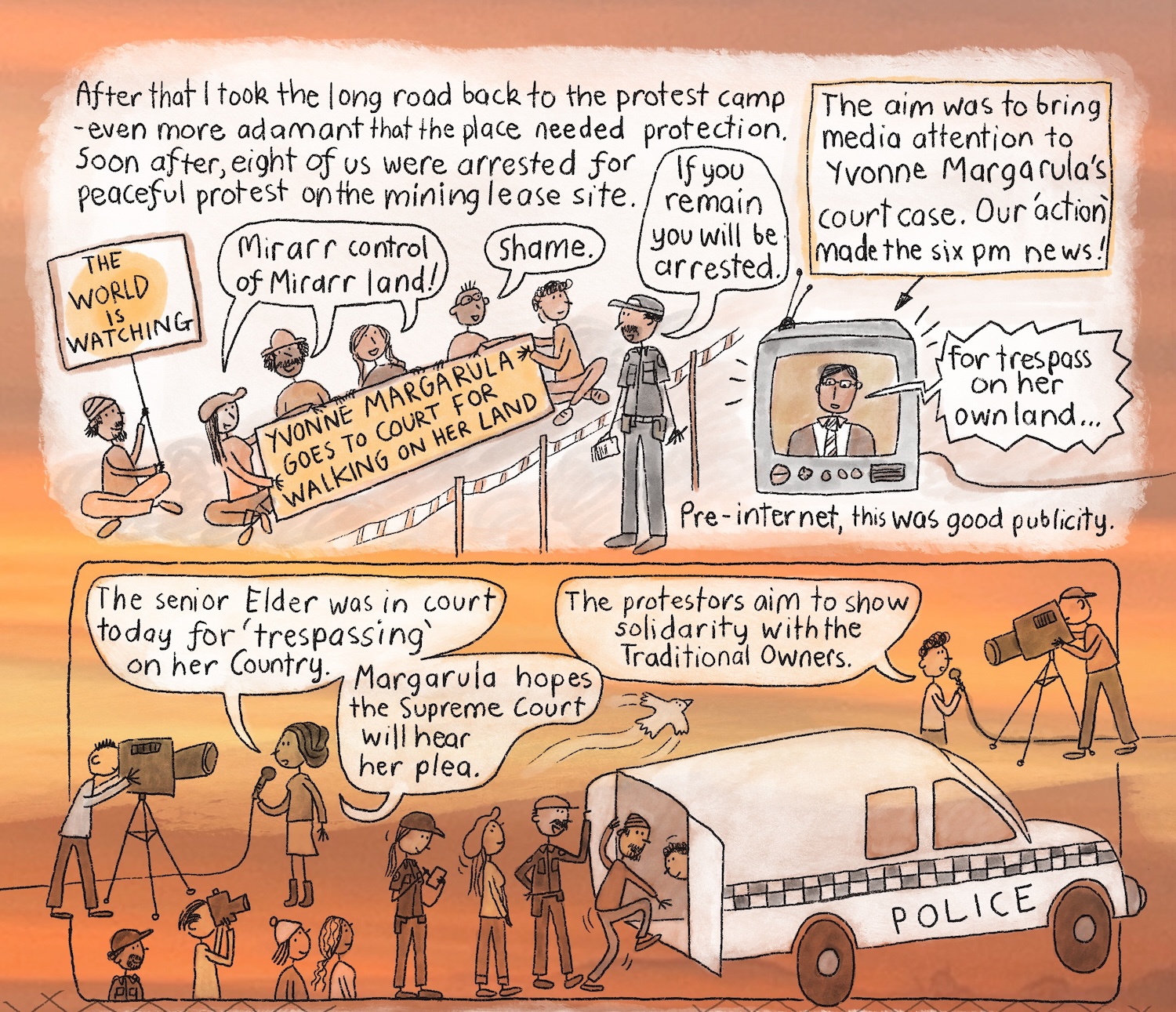
I was in the city of Naarm (Melbourne), going to some huge protests opposing a uranium mine in Kakadu World Heritage National Park. The local Mirrar People asked for people from all around the country to come and support them. I heard that there were buses taking people there and decided to go and support them, and so I could further understand what was going on.
This was a protest that was led by first people’s, and was eventually successful. It took many years, and much of the final work was still unfolding during the time of creating the book. There was so much that I didn’t really understand until later, for example that non-aboriginal people including myself were putting ourselves in positions where we were arrested, and that it was far safer for us to be arrested than Aboriginal people, where there are huge risks associated with incarceration. Australia has outrageously disproportionate incarceration rates for Aboriginal People. Along with so much other systemic racism.
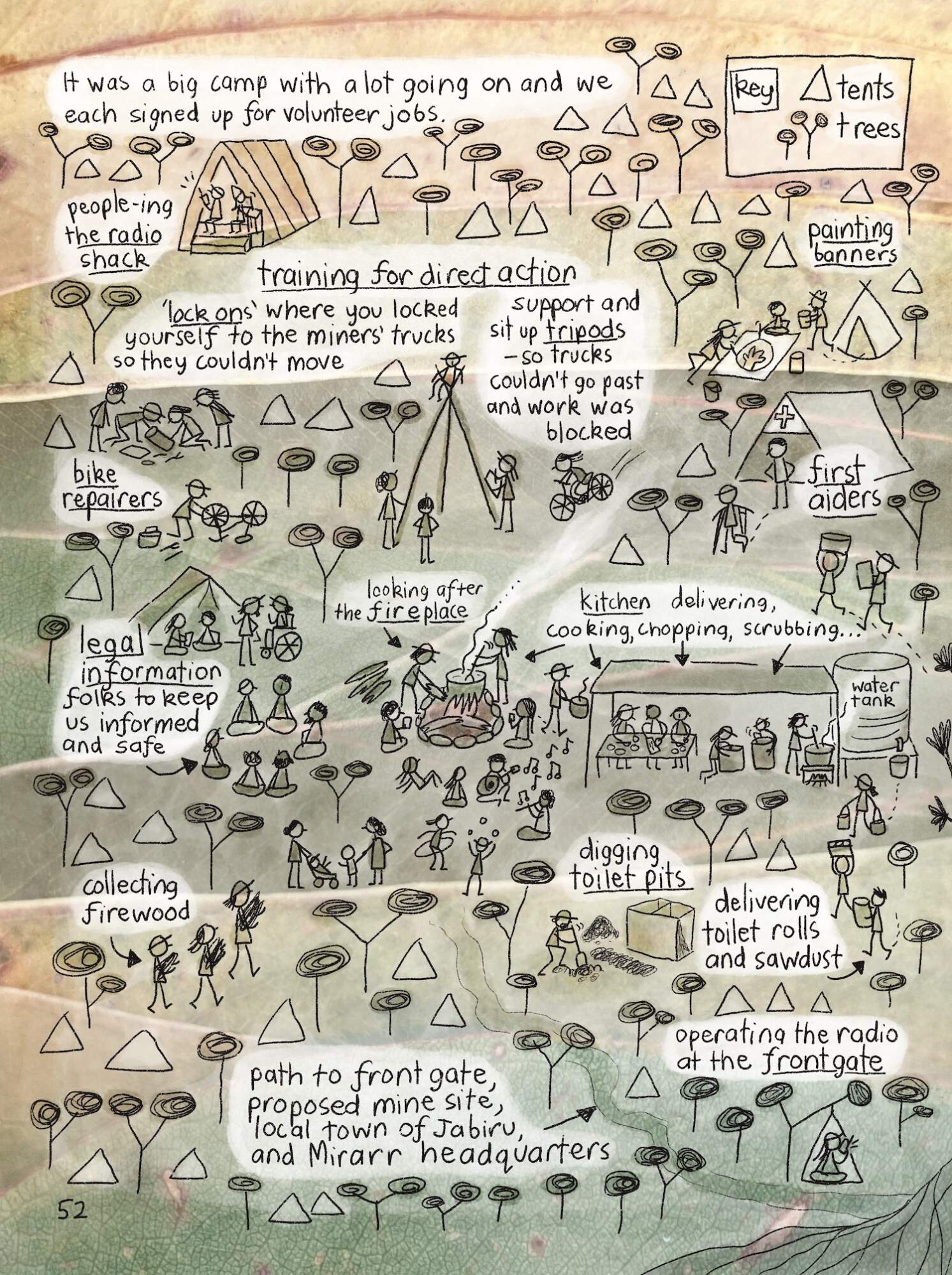
I learnt about collectivism and the diversity of roles for a successful campaign. Like how the person locking onto a truck needs a whole crew with them – witnesses, legal people, support people, technical people, media people, cooks, drivers, radio people, liaison people and so much more. Collective action. I learnt about determination and years that go behind such a campaign, that are absolutely worth it in the end… we are a mere blip in time after all.
The main thing I learnt though is really at the core of the book, and is about the meaning of what we are protecting. And I was blessed by some locals to have a small and poignant taste of that.
 What role do you hope Treeshape plays in encouraging young people to engage with environmental issues?
Some readers have told me this in an intergenerational book, that may be best read with the adults and younger people sitting down together to slowly read and discuss the book as they go. I hope it inspires young people to see there are many ways and roles, and that there can be adventure and joy in it. That you can combine your strengths and interests with activism. That our lives are hopefully long, and making choices and starting something can have a long trajectory that gains life changing momentum and meaning. That it is important to listen to First People’s – whose lands are still being invaded by mining companies, developers, loggers, feral animals and so on. And to see a wider angle view of a life.
How do you balance telling personal stories with broader messages about activism and social change?
They are so interwoven and my life has so far been so full and rich with experiences that I couldn’t possibly say it all, and it keeps unfolding… I had to pluck moments that stood out as turning points, landmarks in my life’s landscape, branch points in my tree.. I enjoyed noticing the seeds of my earlier years and how they influenced things much later – for example my father being a child of war, then teaching us about uranium in the school holidays – which at the time I didn’t question as unusual – and years later winding up being very involved in anti uranium protest – and my fathers response to that… all woven together in my life, which I saw more clearly by creating this book. And how my life fit into the wider social landscape of our place and times.
I had to be sensitive to people in the book. I couldn’t have depicted my mother’s depression while she was alive. And I only included it because it was relevant to how I came to feel the comfort of trees as family – and then act in ways to protect them.
I live in a way that is very much led by my heart, and when there is so much that is heartbreaking it is easy to find motivation for change, and to use my work to share that. One reader reflected on my book saying “you have had all these experiences that you get to share- what’s the point otherwise.”
 Were there any challenges in translating real-life events into the visual and narrative style of a graphic novel?
Firstly I work with First People’s to find ways of including what I want to say with what is Culturally appropriate for me to share. This can be very slow and I am always very careful in following protocols, and strive to gain funding to pay well for Cultural consultation and content.
I had to remove some things to be able to get it published and for personal reasons. Though I found ways to convey what was behind those parts. It is the first book where I have used photographs and I sought others whose photos could contribute to the book, including of Mirarr People, old growth and logging coupes. Also as things changed during the making of the book there was more I wanted to add which didn’t all get past the line. Research is arduous and can involve lots of travel. I do my best to get it right with fact checking, but it doesn’t always turn out 100%.
Another thing people don’t realise is the page count matters. It is expensive to produce a full colour book, and so I have to work at being very concise on what is a huge story. Combining words and image can help with that. It is a bit like staging a play too, where things have to run across the page from left to right. I loved breaking that rule on the double page where my son and I walk around the lake. I had to use a lot of arrows and do a multiple rough versions to make sure the readers didn’t get lost.
How has your relationship with nature and place influenced your creative process over the years?
The older I get, the more time I spend in one place, and on the planet, the more I am understanding how we are creatures of place. We are place. We are nature. That sense of belonging comes from being long in… and those things inspire what my work is about. The more sensitive I become to that, the more I feel compelled to express the need to care for all life on earth. By being lead by love. And to do this in the best way I know how, which is to create.
 What advice would you give to someone who wants to get involved in activism but isn’t sure where to start?
Find what you love doing, what your strengths are, what you care about… In the words of the great ancient Chinese philosopher Lao Tze – “the thousand mile journey begins with the first step”, or “start with the ground beneath your feet.” Any step! I’m a believer in momentum. Trust that one step, lead with love and good purpose, will lead to another and another… all you have to do is take it.