
Interview with Abby Wambaugh by Phoebe O’Brien and Rachel Iampolski // Photo by Emilio Madrid
Abby Wambaugh’s debut show, The First 3 Minutes of 17 Shows, began from what she describes as “a hard, bad, sad thing” — a late miscarriage that reshaped her life and, ultimately, led her to comedy. Honest and funny, the show folds grief into silliness, moving rapidly through stand-up, storytelling, physical comedy and audience participation with the kind of theatrical instinct that keeps you on the edge of your seat.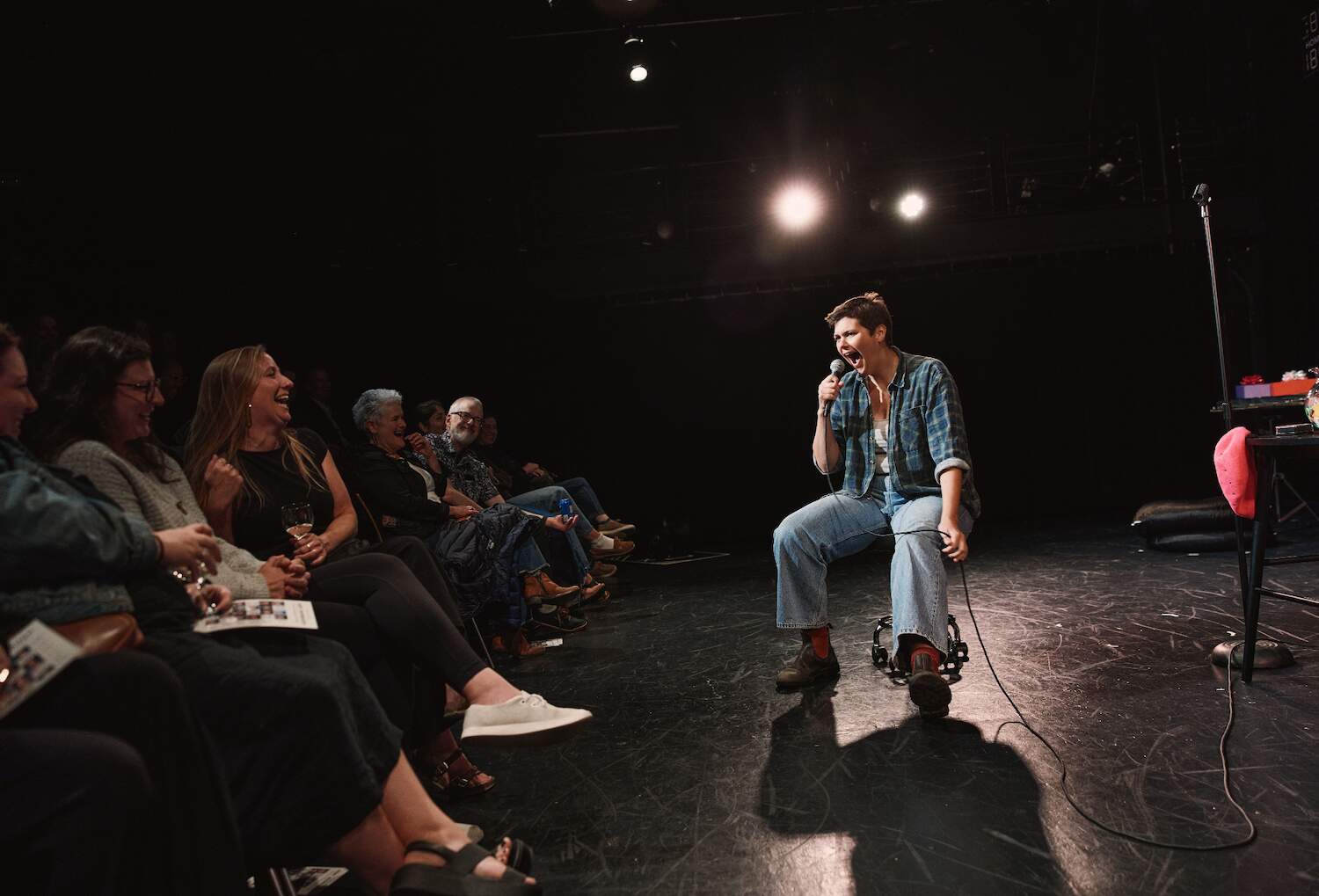
We meet Wambaugh at the National Gallery of Victoria’s tearoom between sets. She is warm and unguarded, chatting about finding her voice through grief, festival life and joking about the humidity all with the same ease. This quality runs through her show, moving between grief and number puns in a striking balance. What may seem like a deceptively playful structure — a show built from the opening moments of seventeen different possible shows — quickly reveals interconnected fragments that come from something much deeper. Telling us about how the show came to be, she says:
“As I started to make the show, I knew I wanted to tell the story of how I started doing stand-up after a late miscarriage,” she says. “And as I was making the show, I realised… all the shows I wanted to do were connected to that story.” What emerged was not only a structure, but a philosophy that she carries through the show: “beginning something and not finishing it is not unlike a miscarriage.”
As we take a moment to let this line sink in, Abby is quick to make a joke about number-puns. Just as in her show, what could sound unbearably heavy, Wambaugh does not treat grief as something solemn that needs to be handled with reverence alone. Instead, she lets it live alongside absurdity, awkwardness, tenderness and play. What was an experience she “wouldn’t wish on anybody” has also helped her open her heart in a way that has “made [her] life richer and more beautiful”. In fact, it brought comedy into her life: “I think it was such a gift to me that this is my first show, and to really be able to find out so much about my creative process in doing it”.
She gives the example of a long-running bit in the show where she does an impression of the number nine. “It just came to me like all the way done, finished,” she says. “I didn’t do any thinking about it. I just wrote it down, my pen wouldn’t stop moving, and I was like: what is going on?”
For a while, she says, she had no idea why she kept returning to it. Then, while looking for a prop in her basement to inform her number-nine costume, her partner handed her an old pregnancy pillow — one they had put away after her miscarriage — and it fell into the perfect shape of a nine. Wambaugh is not above laughing at how this sounds. She describes herself as someone who believes in “everything magical almost all the time”, though “to a degree that I temper, depending on who I’m talking to” — before jokingly checking, “ this for a women’s magazine right? Great!”
This felt more like confirmation rather than coincidence. “When you don’t know why you’re doing something but you’re turned on to making something,” she says, “follow it and something incredible can happen that tells you the answer.” Later, at a work-in-progress gig, someone pointed out a layer of symbolism she hadn’t noticed in the number-nine impression (the bit she would not give up) – which is that nine months is the duration of a full-term pregnancy.
This way of working — intuitive and open to revelation — shapes not only the content of The First 3 Minutes of 17 Shows, but its relationship to form. Wambaugh describes her brain as “like a rock tumbler”, tossing in “handfuls of big stones” and letting them turn until something smoother begins to emerge. It is an apt image for a show that feels full of fragments yet somehow arrives whole.
That openness also extends to the room itself. She makes a point of greeting her audience at the door before the show begins. “It’s nice for me to look them in the face,” she says. “These are the people I’m going to perform to tonight.” Her frequent breaking of the fourth wall, and the show’s meta-awareness of itself as a performance, reflect the same ethos: “It’s nice for me to remember that I’m in the room with these people right now… because otherwise we could all just be on our phone.”
In New York, she says, she developed a small rule for herself: every night, figure out what she loves about that audience. Sometimes it is a particular laugh, sometimes a strange response, sometimes just the fact that a couple with a newborn has turned up for their first comedy show — or, on the night we attend, Celia Pacquola doing the worm. “People who come to my shows,” she says with a warm grin, “are very nice, good people.”
That same collaborative spirit is evident in her creative process also. We are joined for some of our tea by Lara Ricote —a fellow comedian who directs Abby’s show and she in turn directs hers — and the two talk candidly about their relationship less as a formal arrangement than as an unusually deep creative exchange. Wambaugh says she had not even been all that interested in comedy before she began making this show, in part because stand-up can feel so independent. “I really do want to collaborate,” she says, and meeting and working with Ricote has opened space for that. The work began in conversation: long voice notes, weekly calls, hours of talking through ideas until they found their shape.
Wambaugh says what she wanted from her own work was the feeling she had in her relationship with Ricote: “real openness”, the ability “to be as silly as you want to be and then… as sincere as possible” and then “flip right back over”.
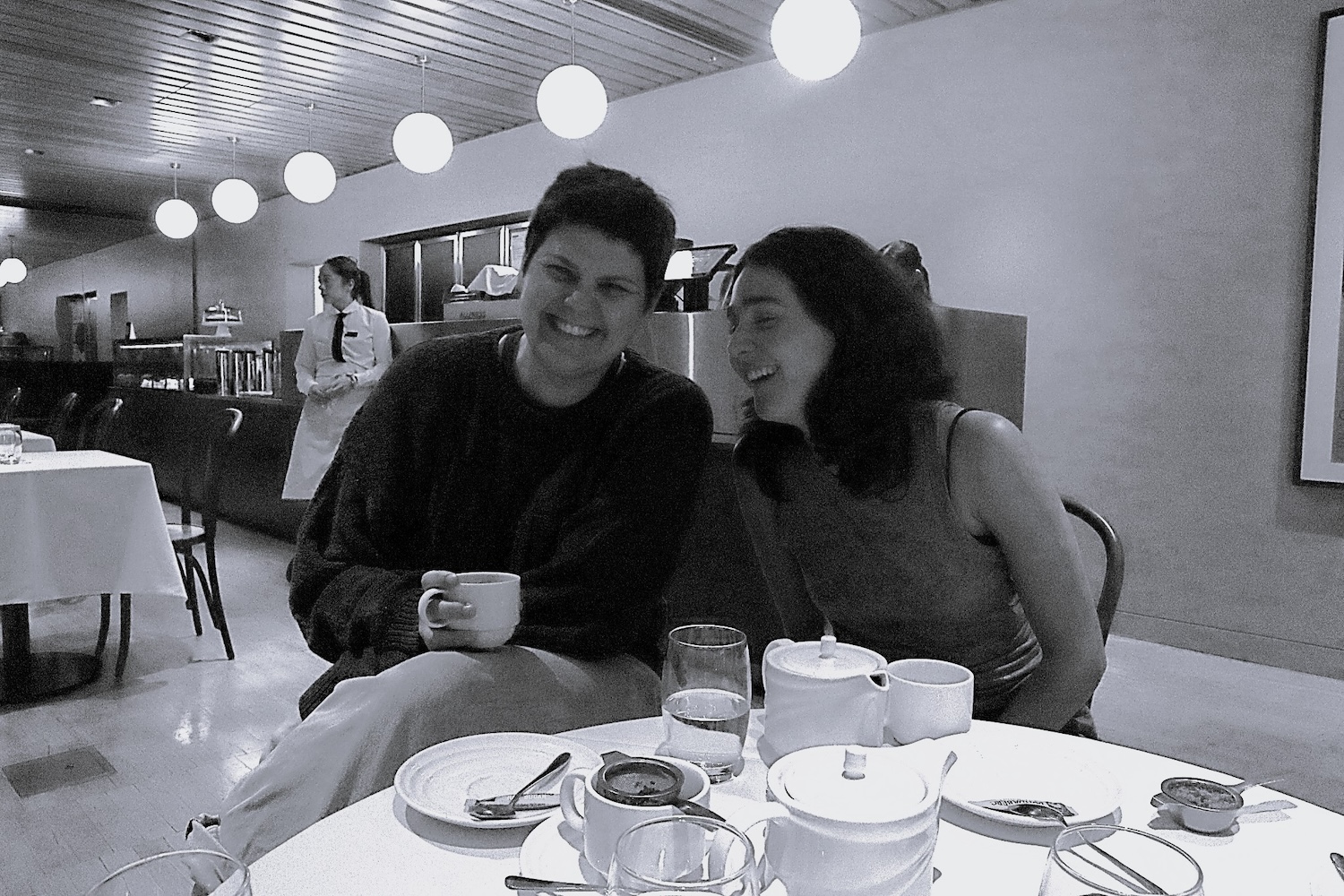
Abby and Lara Ricotte over tea
Another important relationship threaded through the story of this show’s rise is that of Hannah Gadsby and Jenny Shamash. Wambaugh recalls first meeting Gadsby after a performance in Edinburgh, in a tiny 52-seat room where an accidentally perfect moment unfolded mid-show. Later, after drinks and shared cities, the relationship deepened: “They have really been allies.” Jenny Shamash is now her producer, while Gadsby, Wambaugh says, came to see the New York run around sixteen times. “It was a really fun game to try to make Hannah Gadsby laugh every night.”
That backing has helped carry the show across Edinburgh, New York, LA, London, Adelaide and now, for the first time, Australia’s biggest comedy festival in Melbourne. But for all its growing success, Wambaugh still talks about the work in intimate terms, something that keeps her heart open, and lets her create a different experience with a new room each night. “The way that you can make an hour-long show and really create an experience for an audience and for yourself that you get to have every night,” she says, “I cannot believe my luck.”
Wambaugh’s experience of parenthood, too, sits quietly but powerfully behind the work, sharpening her perspective.“I think it is good for my kids that I am really doing something in my life that I feel lit up by,” she says. “I can be more of the parent that I want to be… because I know also I get to be a different version of myself in a different way.”
She speaks about feeling as something close to a working method. On tour, she says, everything sits “right under the surface”, as if she is “drywalled over with one layer of anything”. Sometimes that means crying because a barista was sincerely concerned the coffee might be too hot for her hands. Sometimes it means standing on stage with all her nerves and tenderness close by. Either way, the feeling is available — and Wambaugh, unlike many comics, doesn’t seem especially interested in armouring herself against it. Parenthood, she says, has “contractually obligated” her to optimism. “I understand the rationality of pessimism,” she says. “I know what you’re saying, but now I must disagree.”
When asked what must-see shows she recommends for this year’s festival, her face lit up as she recounts the great shows she’s seen: Josie Long, Piotr Sikora, Hannah Gadsby, and Sofie Hagen are included in her highlights.
As the interview winds up we walk through the gallery and see some designer chairs: “I live in Denmark now, I love good chairs!” she jokes as she inspects earnestly said chair. This feels like it could be the start of her 18th show – and we can’t wait to see it.
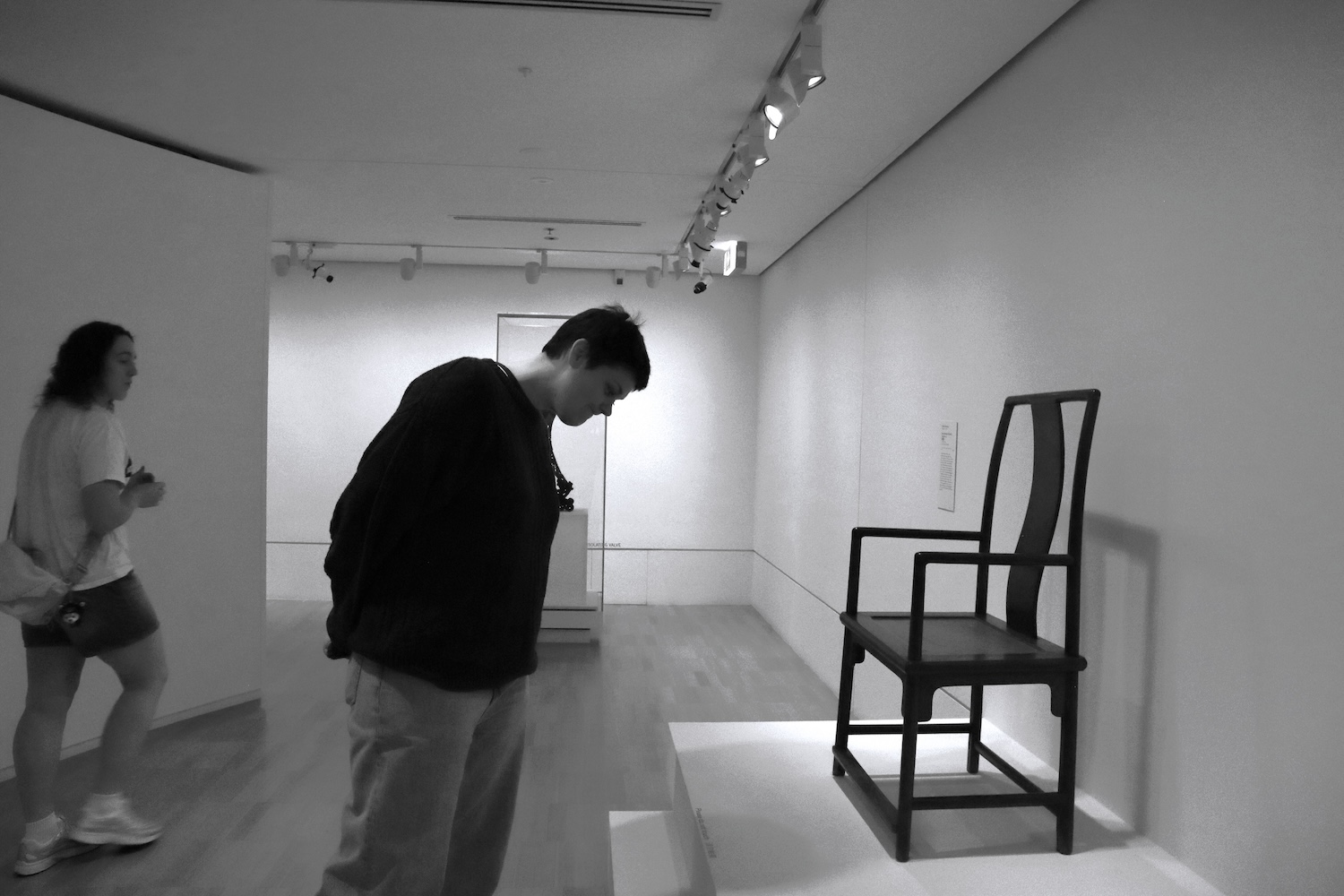 Abby Wambaugh
Title: The First 3 Minutes of 17 Shows
Venue: Melbourne Town Hall: Flag Room